


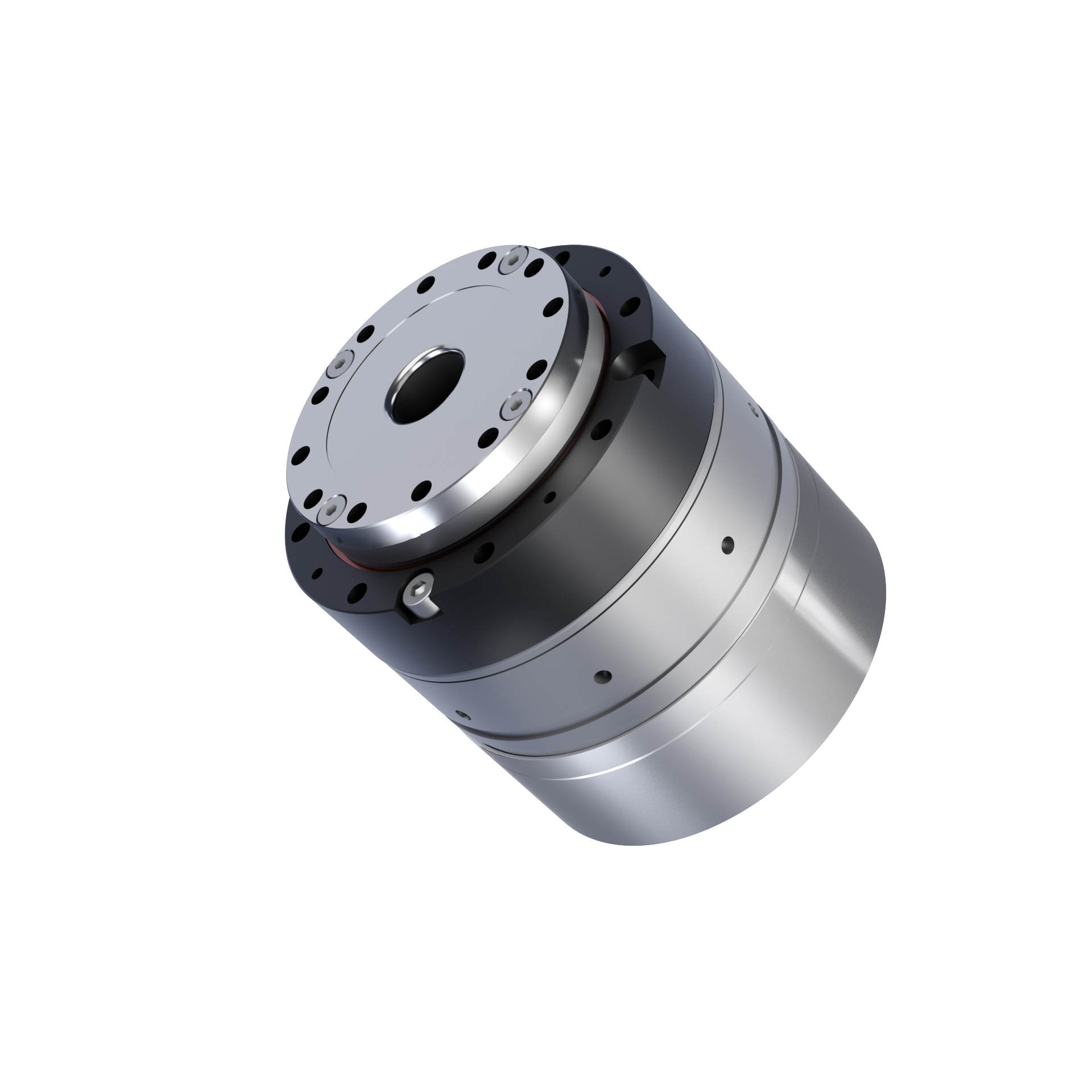
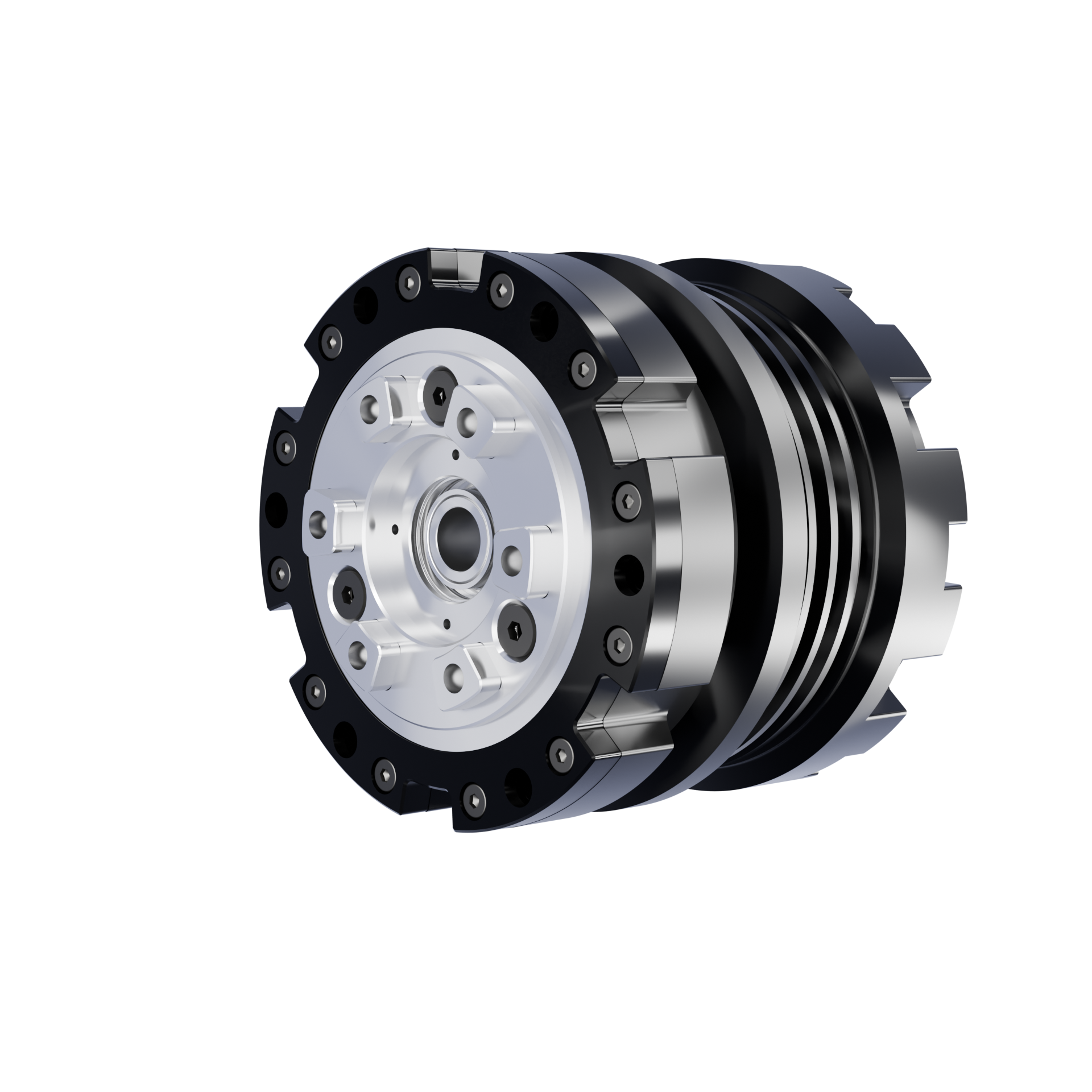
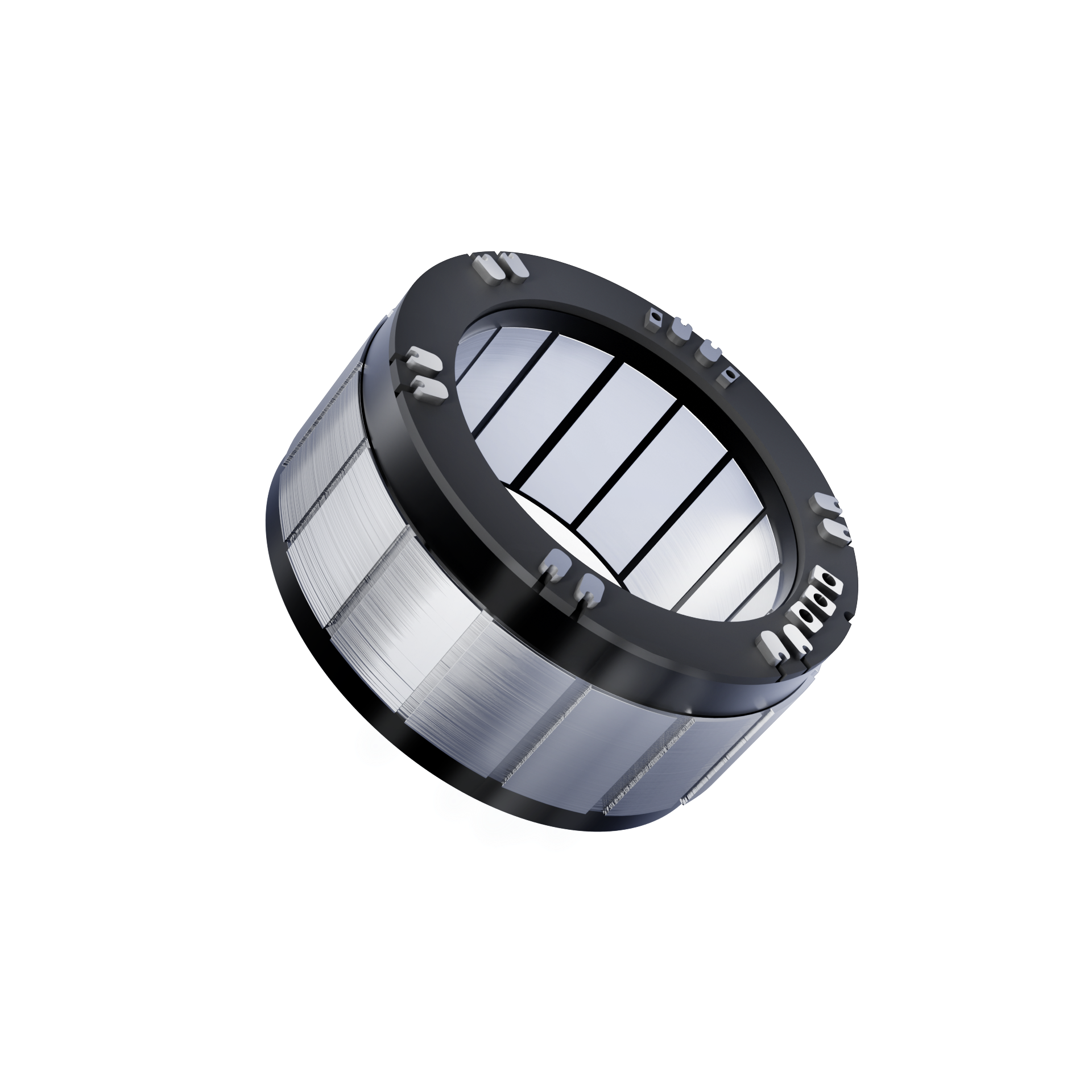
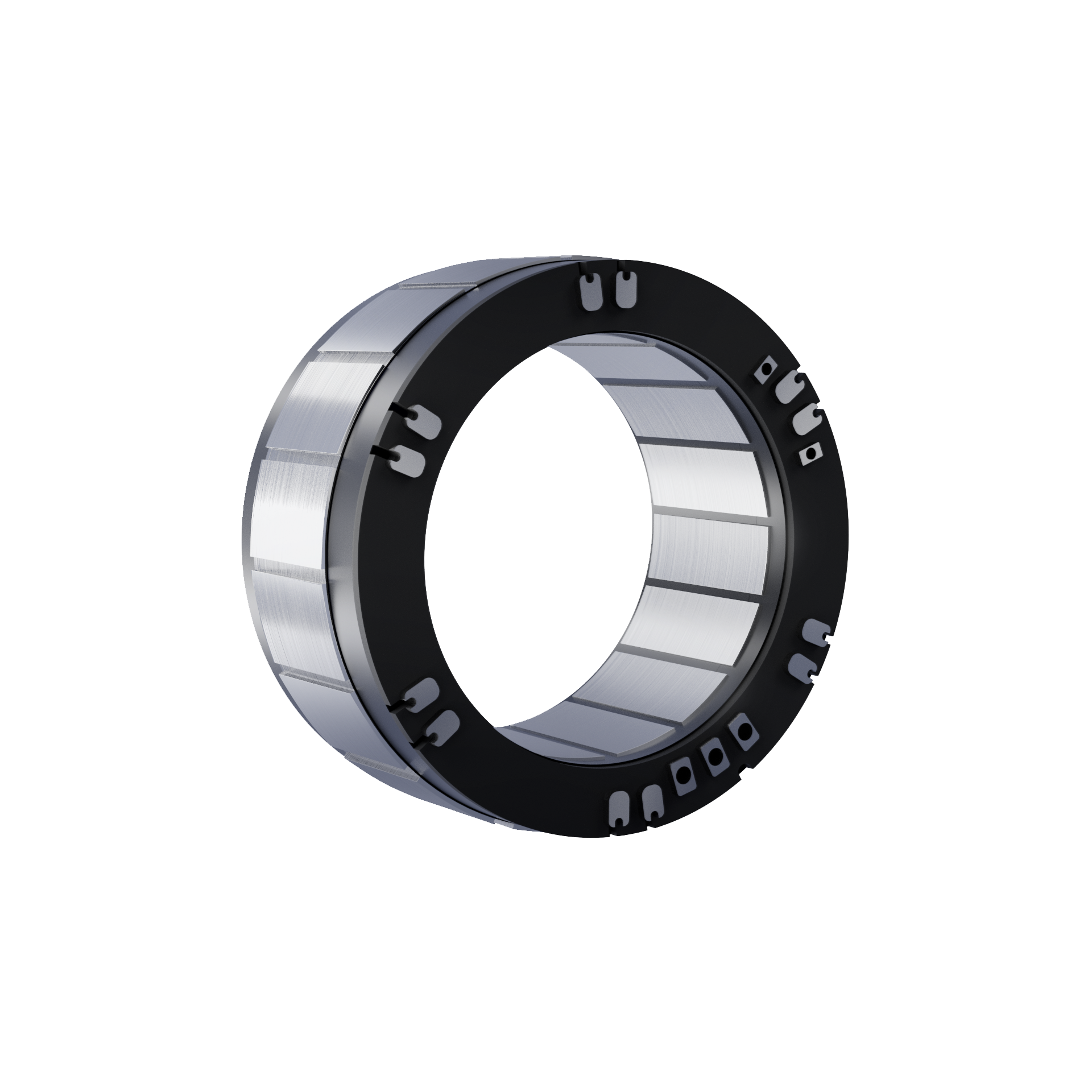
FM2-04308KTN376 Frameless Motor | 77W High Torque Density Motor for Robotic Joints | 48V
 Production & Delivery
 Production & Delivery
- Our products normally take 2‑4 weeks for shipment after order confirmation.
- Shipping term: FOB Shenzhen.
- Packaging notice: Product packaging may display the Leadtron or Leading Robotics logos, both part of the Leadshine group.
 Professional Service
 Professional Service
We provide customers with timely and professional pre-sales and after-sales technical support. Additionally, products can be customized according to customer requirements.
 Payment Methods
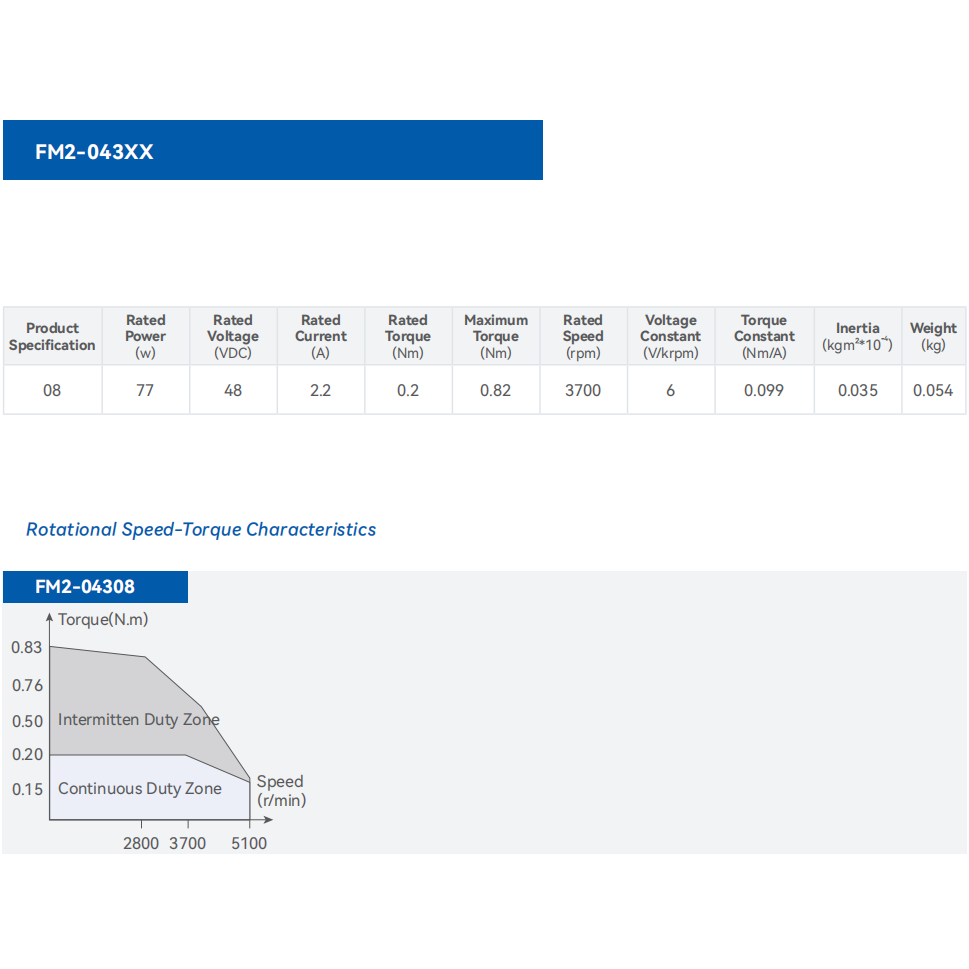
77W | 0.2N.m | 3700rpm
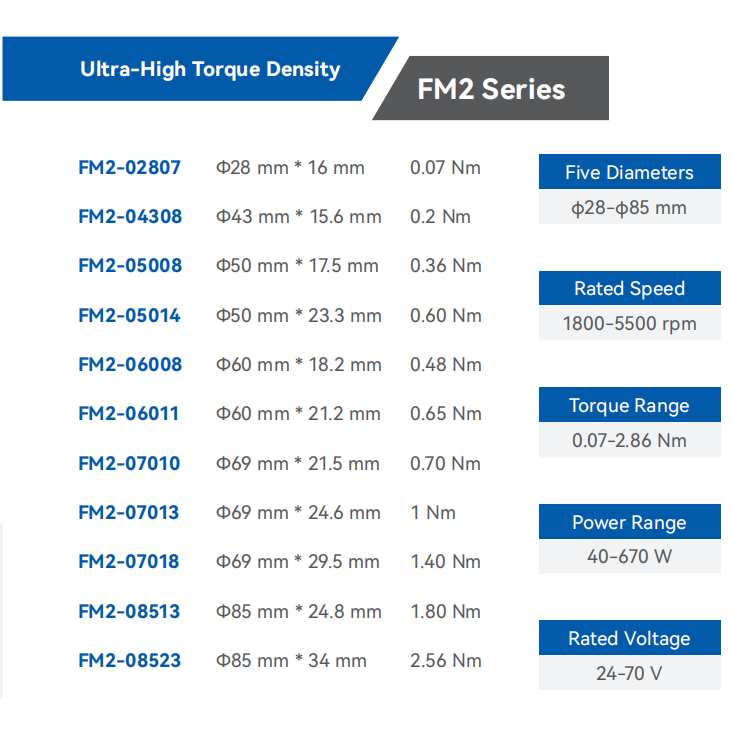
- High Torque Density: 0.20 Nm rated / 0.82 Nm peak torque (43 mm outer diameter platform)
- Ultra-Low Rotor Inertia enables fast response & precise control
- High speed: 3700 rpm rated, 5500 rpm maximum
- Improved thermal efficiency: 20% lower power loss
- Lightweight at only 54 g, ideal for compact robotic designs
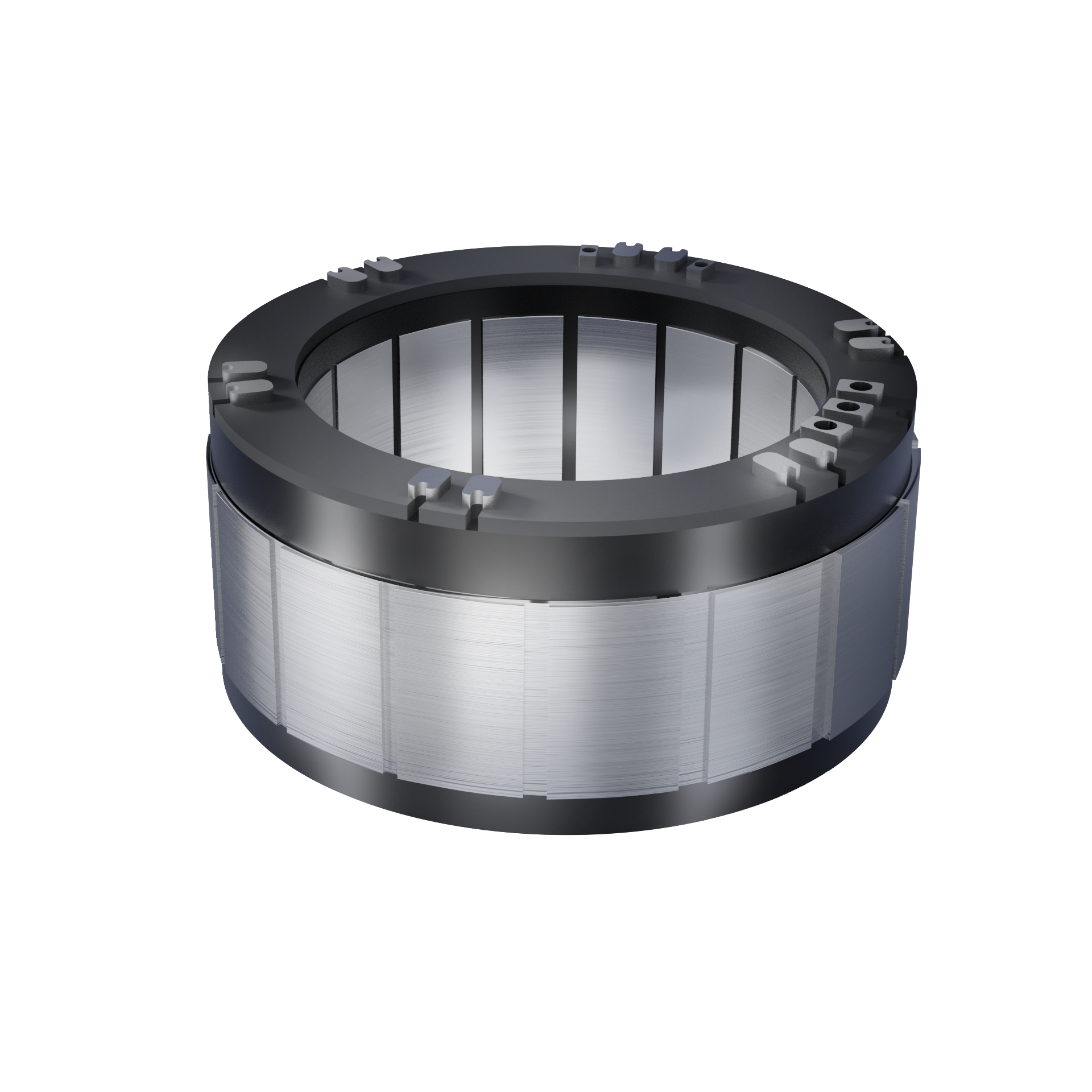
- Frameless structure for flexible actuator integration
FM2-04308KTN376 Frameless Motor | 77W High Torque Density Motor for Robotic Joints | 48V
Sale price$79.00
Regular price$89.00
Number of phases
3
Number of pole pairs (P)
10
Resistance Line-line (Ω)
1.62±10%(20℃)
Stator Winding Inductance (mH)
0.62±20%(20℃)
DC Link Voltage (V)
48
Rated Current (A)
2.2
Rated Speed (rpm)
3700
Rated Torque (N.m)
0.2
Peak Torque (N.m)
0.82
Peak Current (A)
8.8
Maximum Speed (rpm)
5500
Back EMF Constant (X10⁻³V/rpm)
6
Torque Constant (N.m/A)
0.099
Rotor Moment of Inertia (x10⁻⁴kg.m²)
0.035
Weight (kg)
0.054
Insulation Class
F
Insulation Resistance
DC500V, above 100MΩ
(stator&NTC) Insulation Strength
600VAC/1S/2mA&300VAC/1S/5mA
Why Choose Us
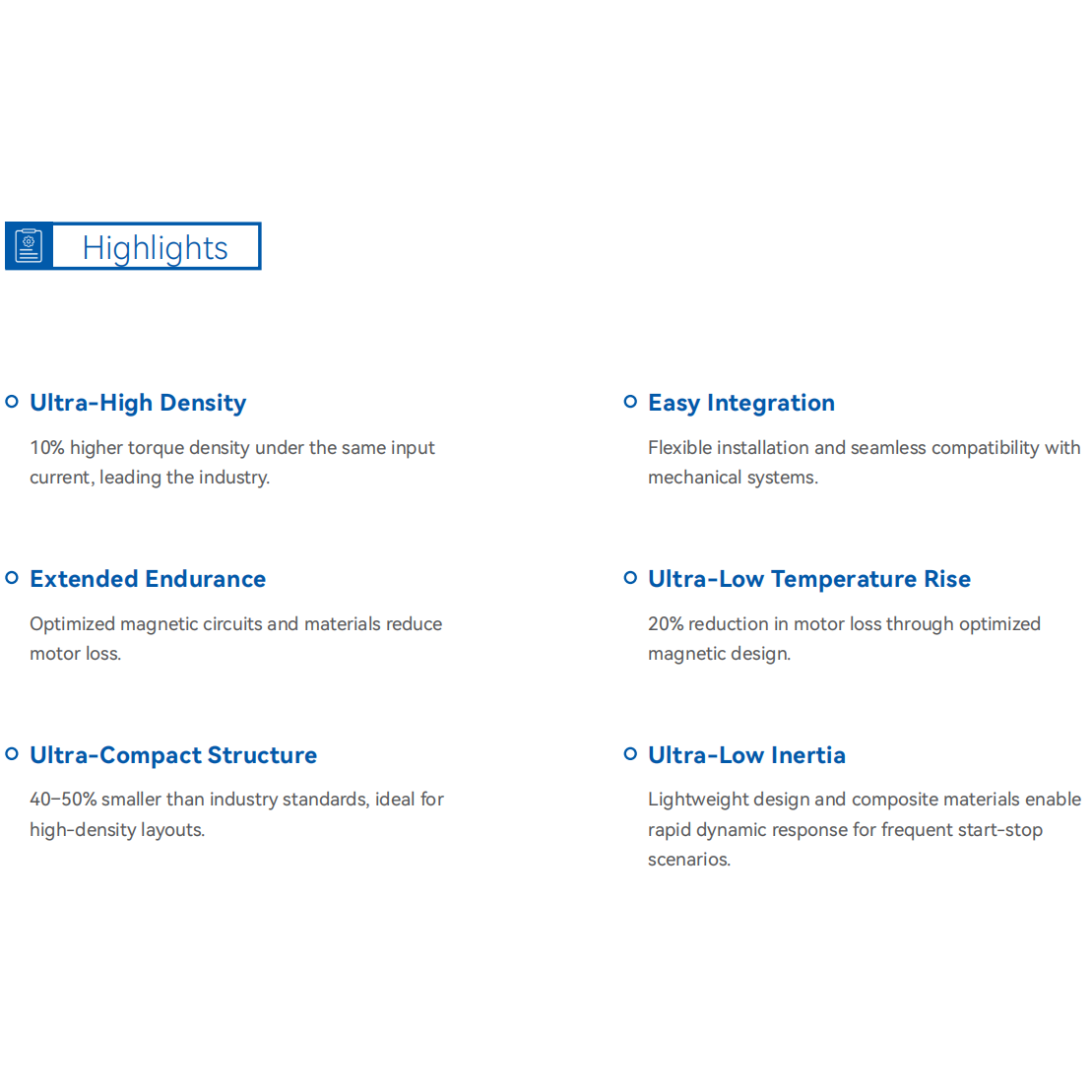
Leadshine’s FM2 frameless motors address robotic joint issues—heat, weak burst power, and poor consistency—with “ultra-low temp rise, ultra-high density, extended endurance.” Through next-gen magnetic circuit optimization and vacuum potting, they achieve 10% higher torque, 20% lower losses, 30% longer runtime, while fully automated lines ensure high consistency.
Ultra-High Density
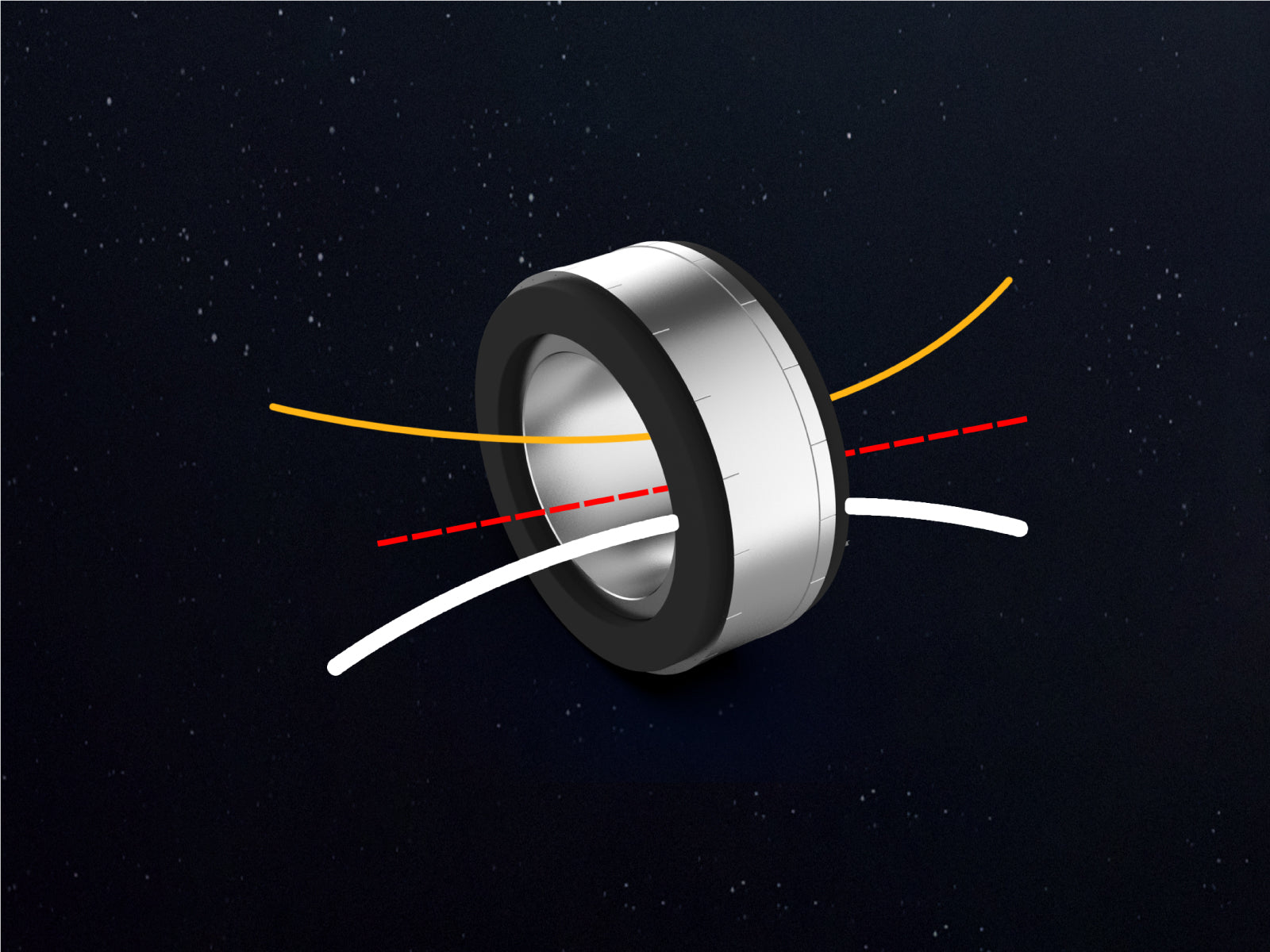
With the same input current, motor torque increases by 10%, leading the industry.
Extended Endurance
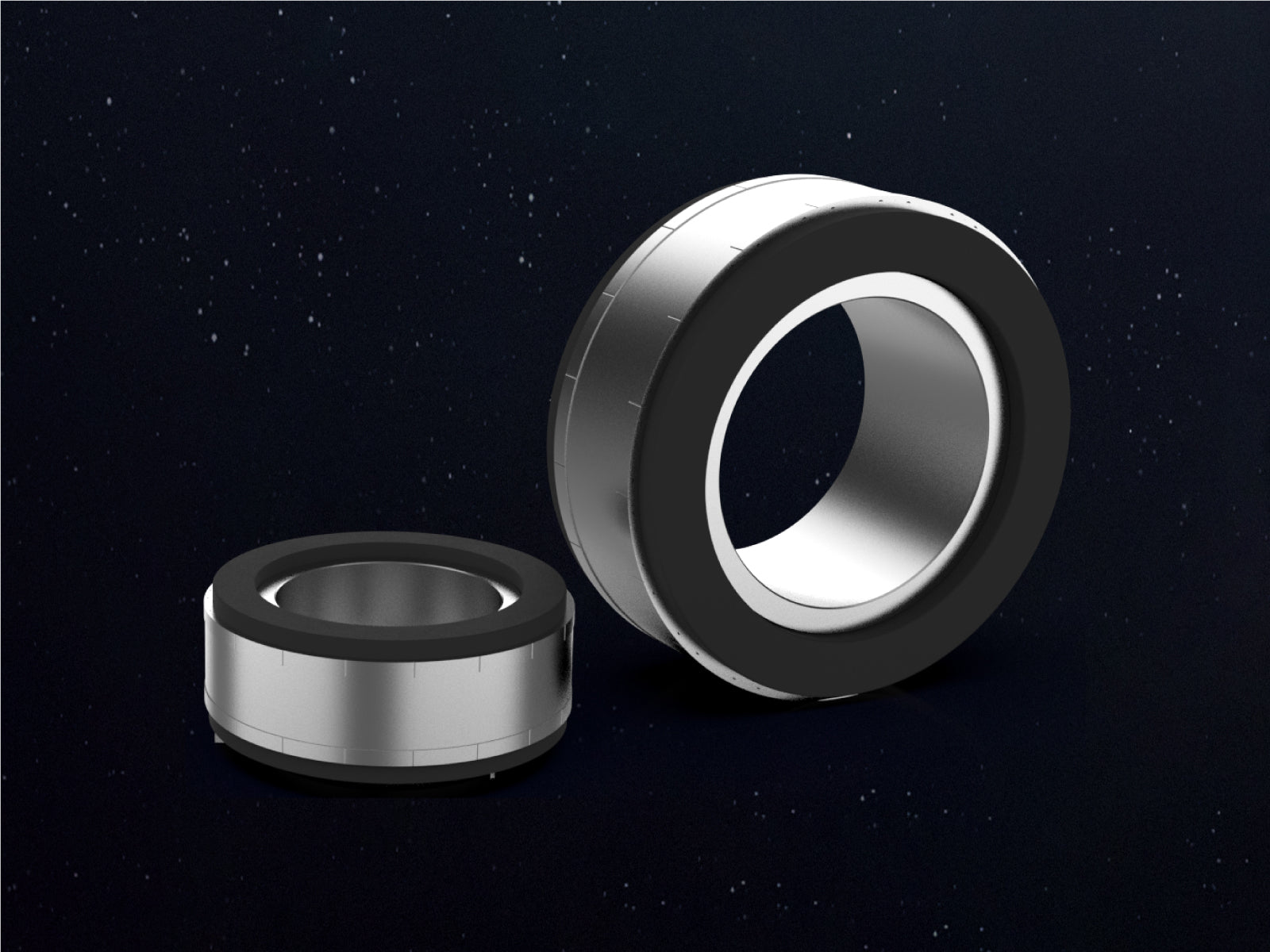
Optimized magnetic circuit and material selection reduce motor losses and extend runtime.
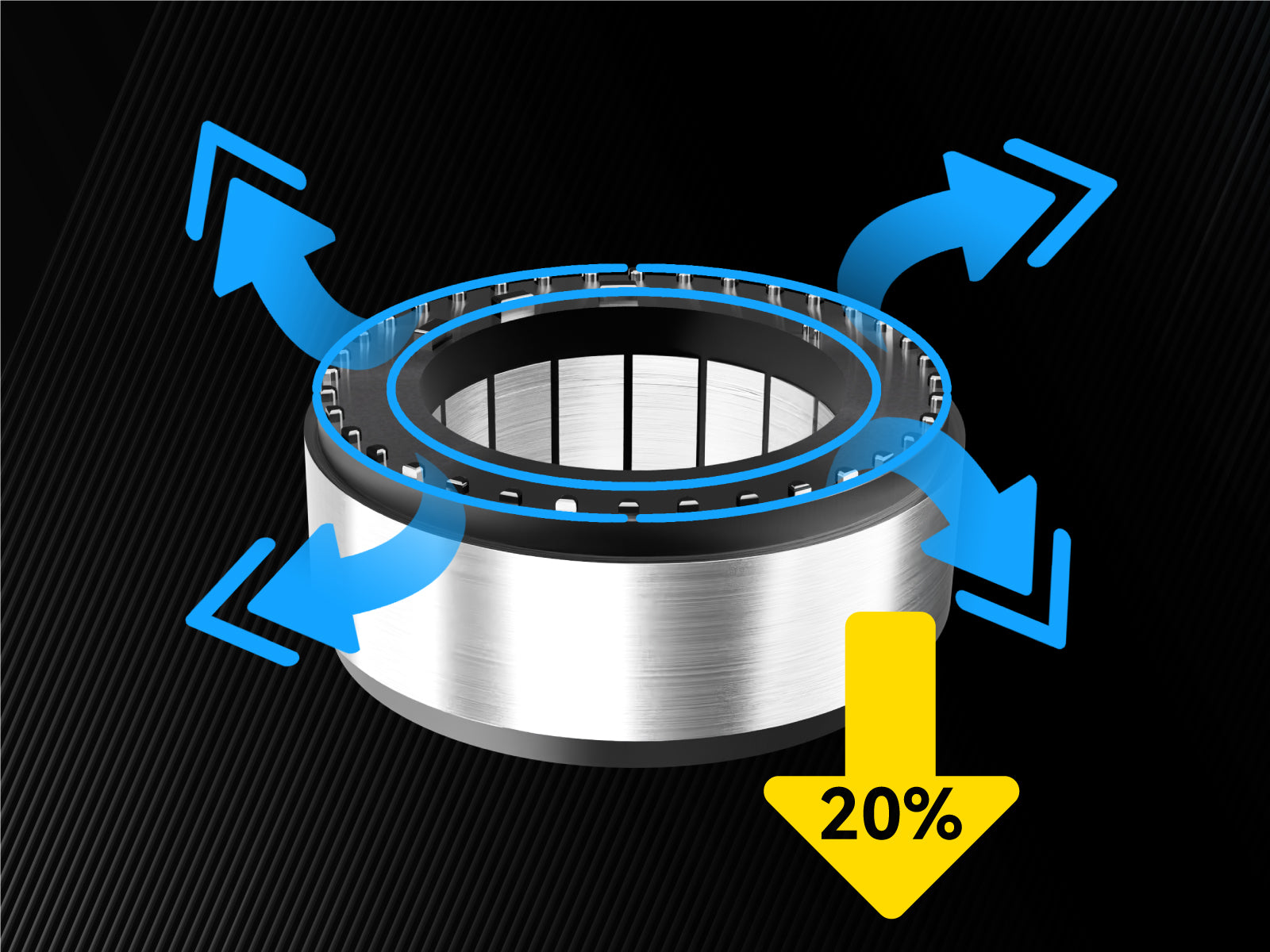
Ultra-Low Temperature Rise
Optimized magnetic circuit design cuts motor losses by 20%, greatly improving power conversion efficiency.
Applications
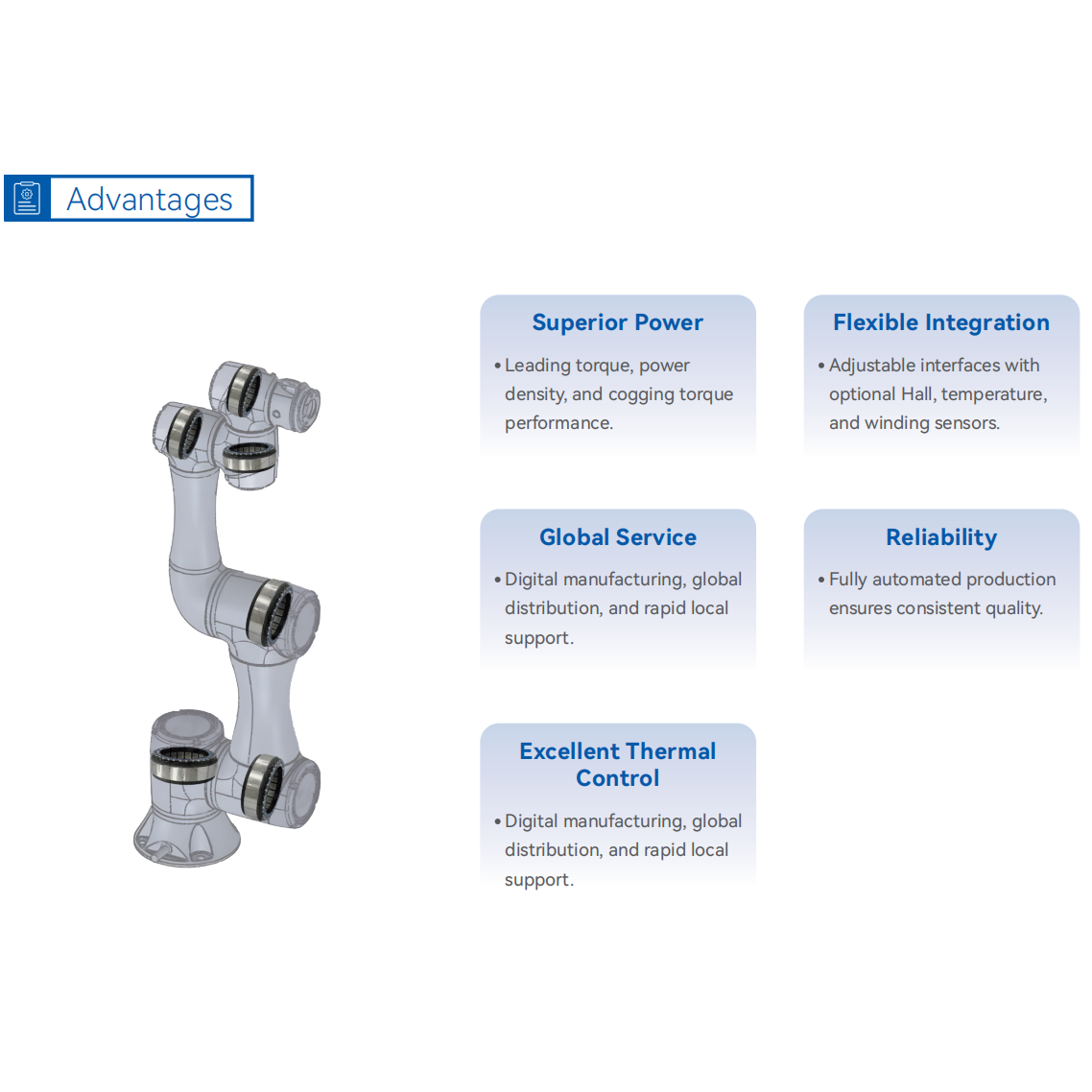
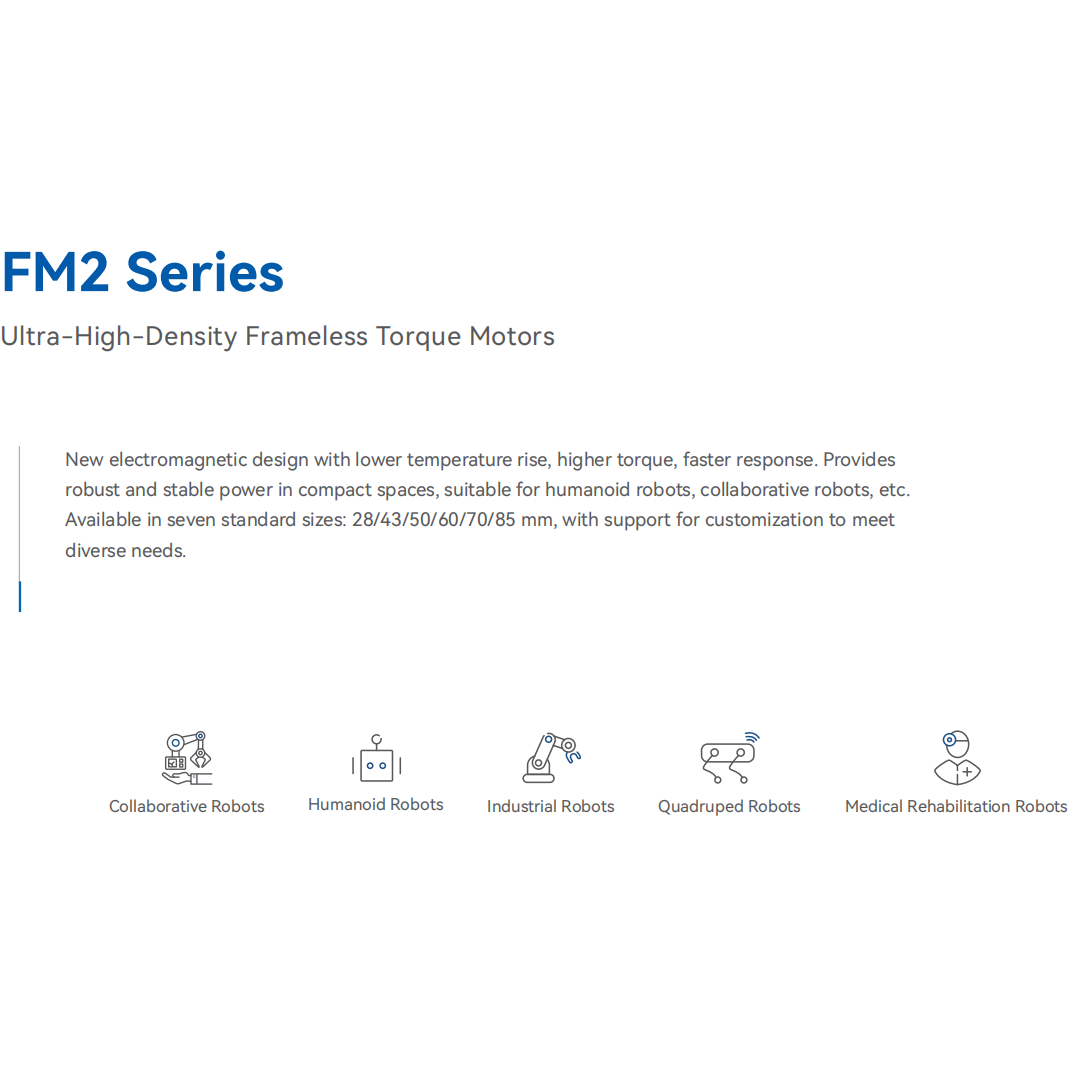
Leadshine's FM2 Series frameless motors, featuring advantages such as ultra-low temperature rise, ultra-high torque density, and extended endurance, are widely used in robotic joint actuation, industrial automation, high-end medical equipment, aerospace, and other scenarios.
1. Robot Joint Actuation
• High torque density for better power-to-weight ratio and safety
• Direct drive, faster response with fewer transmission parts
• Proven in humanoid and collaborative robots

2. Industrial Automation
• Boosts 5-axis machining center rotary acceleration to >3 rad/s²
• ~20% higher machining efficiency with high precision
• Ideal for CNC and precision assembly lines

3. High-End Medical Equipment
• Meets accuracy/stability needs for proton therapy and surgical robots
• Low vibration and noise for imaging and precision tasks
• Ensures long-term medical device reliability

4. Aerospace
• Lightweight flight control servos improve fuel efficiency and agility
• High-precision satellite antenna pointing for extreme environments
• High reliability for long-term missions

1. Robot Joint Actuation
• High torque density for better power-to-weight ratio and safety
• Direct drive, faster response with fewer transmission parts
• Proven in humanoid and collaborative robots
2. Industrial Automation
• Boosts 5-axis machining center rotary acceleration to >3 rad/s²
• ~20% higher machining efficiency with high precision
• Ideal for CNC and precision assembly lines
3. High-End Medical Equipment
• Meets accuracy/stability needs for proton therapy and surgical robots
• Low vibration and noise for imaging and precision tasks
• Ensures long-term medical device reliability
4. Aerospace
• Lightweight flight control servos improve fuel efficiency and agility
• High-precision satellite antenna pointing for extreme environments
• High reliability for long-term missions
${ formatMoney(variantsCurrent[0] && variantsCurrent[0].price) }
${ formatMoney(variantsCurrent[1] && variantsCurrent[1].price) }
${ formatMoney(variantsCurrent[2] && variantsCurrent[2].price) }
Number of phases
Number of pole pairs (P)
Resistance Line-line (Ω)
Stator Winding Inductance (mH)
DC Link Voltage (V)
Rated Current (A)
Rated Speed (rpm)
Rated Torque (N.m)
Peak Torque (N.m)
Peak Current (A)
Maximum Speed (rpm)
Back EMF Constant (X10⁻³V/rpm)
Torque Constant (N.m/A)
Rotor Moment of Inertia (x10⁻⁴kg.m²)
Weight (kg)
Insulation Class
Insulation Resistance
(stator&NTC) Insulation Strength
Learn More
FAQs for Frameless Motors
1. Can the motor be directly integrated into the customer’s existing mechanical structure? Are the mounting dimensions standardized?
Yes. Stator and rotor assemblies are available. Standard mounting dimension drawings and custom non-standard designs are supported. Machining accuracy of the mounting surface and concentricity must be ensured.
2. How is the motor fixed? Are there recommended stator/rotor fit tolerances? How is concentricity ensured?
The stator can be fixed by thermal shrink fitting (recommended interference ≥ 0.02 mm) or adhesive bonding (clearance ≥ 0.02 mm, with a glue groove recommended). The rotor is fixed with adhesive, with a clearance of approximately 0.02 mm; a glue groove is recommended on the shaft.
3. How is the motor driven? What controller should be used?
A servo drive is required. We offer an in-house integrated ring drive or an external Mini drive, and can also recommend compatible models.
4. Can an integrated version with an encoder be provided?
Yes. Incremental, absolute, and magnetic encoders are supported, enabling closed-loop control and high-precision positioning.
5. What type of drive is required? Are there recommended brands or models?
A drive that supports brushless servo control is recommended. Compatible drives are also available from us.
6. Is the motor compatible with the customer’s existing servo system or controller?
Yes, in most cases. Compatibility depends on interface types (encoder type, voltage and current levels), which need to be confirmed.
7. Is the motor start/stop smooth? Is there guidance for zero-position calibration?
Smoothness is determined by the drive control logic. We can provide tuning recommendations and a zero-position calibration manual.
8. Does the motor support closed-loop control? Can force/torque control or position control be achieved?
Yes. With an encoder and a closed-loop drive, high-precision position, speed, and torque control are achievable. Some solutions support impedance/force control modes.
Can frameless motors be used in high-temperature, humid, or dusty environments?
The motor has an open structure. Additional protection (e.g., dust covers or sealed cavities) is recommended when integrating into the end application. We can provide protection recommendations.
10. What is the service life of the product? Are there any application examples?
Normal service life exceeds 20,000 hours, suitable for 7×24 continuous operation. Widely used in medical devices, robotics, and other fields.
11. Are there relevant life test data or successful application cases?
Yes, there are successful cases across multiple industries, with validation through temperature rise, shock, aging, and other tests.
12. Can non-standard customization be done based on the customer’s structural or parameter requirements?
Yes. Non-standard customization is supported for rotor outer diameter, stator thickness, voltage/current, etc. Minimum order quantities are flexible, and prototype delivery typically takes 4–6 weeks.

Stock Code: 002979
Address: 15-20/F Block B, Nanshan l Valley, No.3157,Nanshan District, Shenzhen City Guangdong Province China
Tel: +86 0755 86088550
Fax: +86 0755 26402718
Website: https://www.leadshine.com
Email: store@leadshine.com


