



Explore our FAQs to quickly grasp how Leadshine products work and solve common issues on your own. If you need further assistance, please email us directly – we’re here to help.
Dexterous Hands
1. For dexterous hand DH116S basic edition: how to change the CANFD connection ID?
The ID can be changed via the host computer.
2. Does the DH116S have a version with tactile sensors?
The DH116S tactile version is still under development. Currently, the DH116 is available with tactile sensor integration.
3. What is the communication frequency of DH116S dexterous hand?
The communication frequency can reach over 100 Hz. With CANfd, the maximum communication frequency can reach 500 Hz.
4. What are the current parameters of the DH116S dexterous hand?
Under 24V power supply for the basic version, the standby current is 12 mA, the no-load average current (five-finger flexion and extension) is 100 mA, and the maximum current is 4.6 A.
5. After connecting the DH2116 product to the dexterous hand, I cannot successfully control the dexterous hand. What should I do?
Please check the wiring connections (whether the driver for the communication device is installed, whether the power supply is correctly connected, and whether the signal lines are properly connected to the communication device).
6. When controlling the dexterous hand with the DH2116 product, the dexterous hand suddenly returns to its initial position (resets). Why?
Check whether the power supply capacity covers the maximum power of the dexterous hand. The maximum power for a single dexterous hand can reach 100W. Under 24V power supply, it is recommended to set the current limit to 8A or above. Verify whether the connected power supply meets this requirement.
7. I have questions about the stroke, speed, and current parameters of the DH2116 dexterous hand?
1 stroke unit is equivalent to 1/10,000 of the maximum travel of the dexterous hand's finger movement. The unit of speed is 0.001 stroke/second. The unit of current is 0.001A. Speed and current can be positive or negative, where positive and negative represent the direction of finger movement.
8. The host computer software installation for the DH2116 dexterous hand fails. What should I do?
The required environment software needs to be installed. After extracting the host computer software package, the installation will proceed automatically.
Integrated Actuator
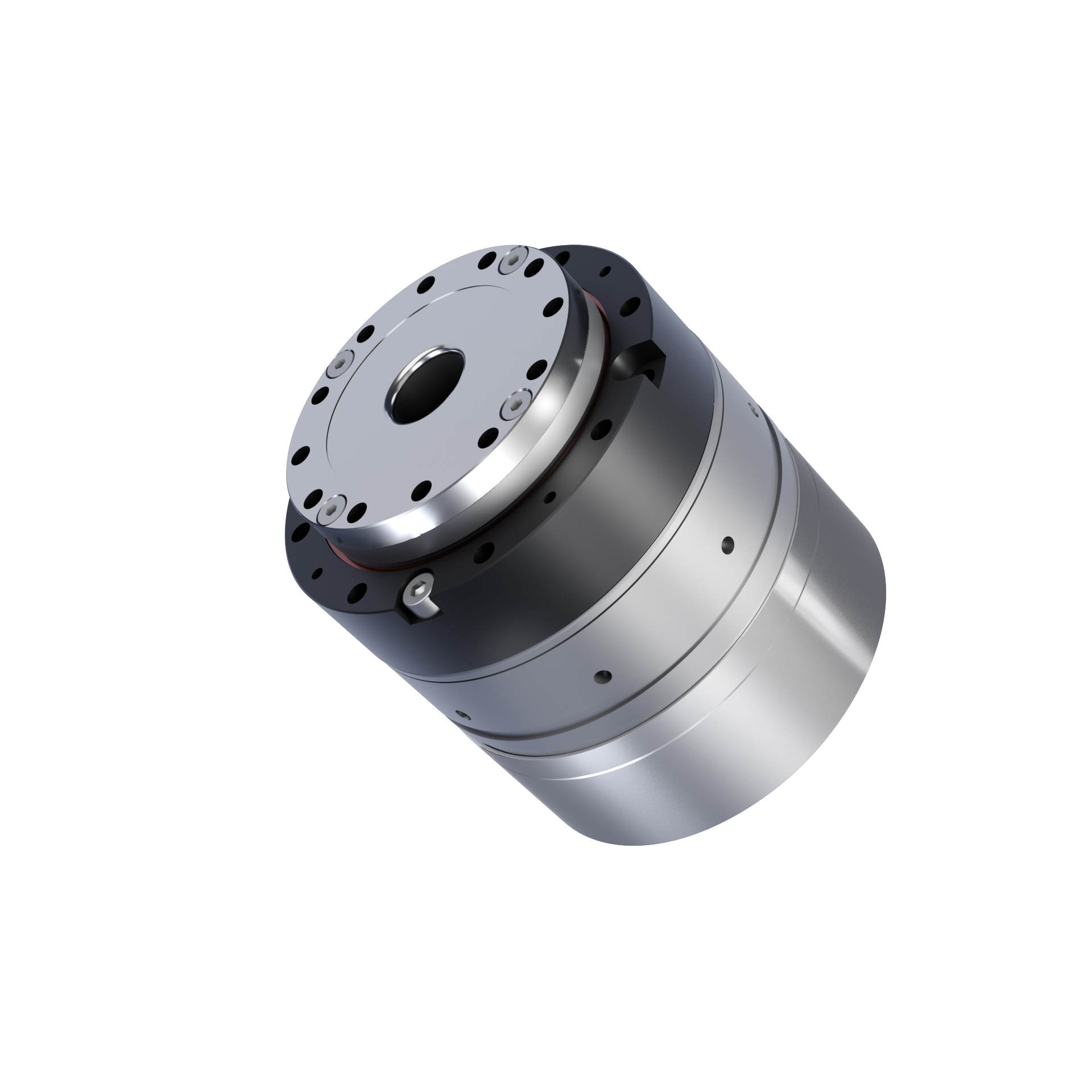
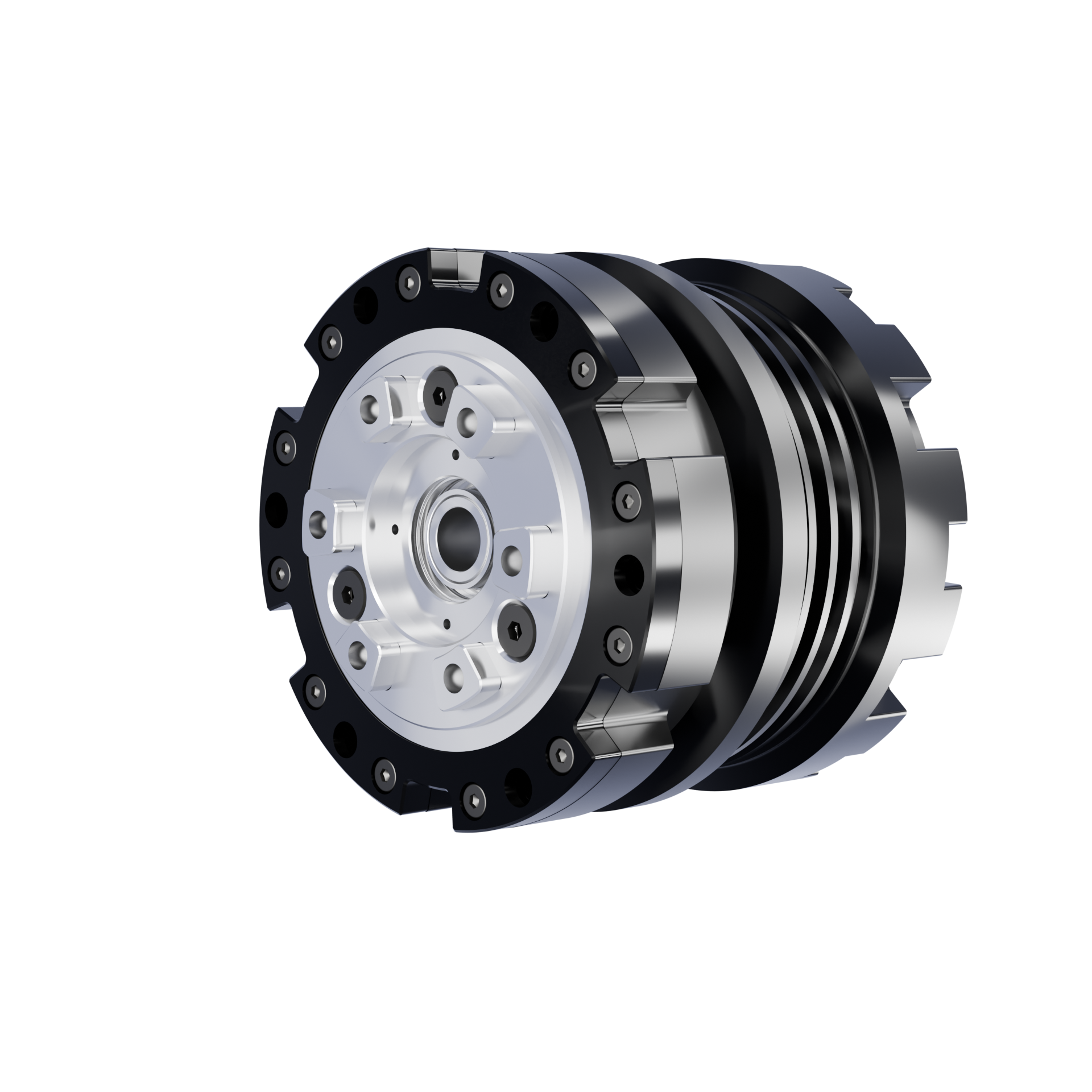
1. What is the installation method? Does it support front/back (reversible) installation and hollow routing installation?
The module is designed for flange mounting. The hollow structure facilitates routing of air pipes, cables, etc. through the center. Installation at any angle is supported. It is recommended to install according to the 3D drawing while keeping the axial load centered.
2. Does it support direct integration with existing mechanical structures?
Yes. We can provide standard installation interface dimensions, flange interfaces, output shaft dimensions, and other information. Fast non-standard customization services are also available.
3. What communication protocols do Leadshine's joint modules support? Are they compatible with existing control systems?
They support mainstream protocols such as EtherCAT、CAN and CAN FD, offering good compatibility. Communication manuals and sample code are available for quick integration with mainstream controllers.
4. Does it support host computer debugging software? Can users perform secondary development?
Yes. Debugging tools and basic development interfaces (e.g., communication protocol documents) are provided to facilitate quick access and testing for developers.
5. Are the reducers in the integrated actuators harmonic or planetary? What is their lifespan?
Both harmonic gear and planetary reducer options are available. Harmonic reducers are lightweight and high-precision, making them suitable for collaborative robots. planetary reducers offer high rigidity and impact resistance, making them suitable for industrial robots or heavy-load applications. Under normal operating conditions, the lifespan is generally 5 to 10 years.
6. What is the approximate lifespan of the module? Can it run continuously?
The design lifespan is typically over 10,000 hours, supporting 7×24 continuous operation.
7. Are there any application cases for Leadshine's joint modules? How is their stability?
They have been applied in collaborative robots, industrial automation, humanoid robots, and medical rehabilitation robots, with positive customer feedback and stability exceeding that of competitors.
8. Can they adapt to harsh environments, such as dust or high temperatures?
Standard modules are recommended for use in normal room temperature environments.
9. Do they have over-temperature and stall protection?
Yes. The modules have built-in temperature, current, and voltage detection mechanisms, and feature multiple protection functions including over-temperature, over-current, and stall protection.
10. Can the modules be customized according to the customer's complete machine structure requirements?
Yes. Non-standard customization is supported, including flange dimensions, shaft length, output type, communication interface, cable interface, and more. You are welcome to provide 3D drawings or technical requirements to discuss customization details.
11. If a module breaks down, can individual components be replaced? Is maintenance convenient?
Due to the integrated design, some components may not be suitable for individual replacement. However, detailed maintenance instruction videos or illustrated manuals can be provided to assist customers with maintenance operations.
Frameless Motors
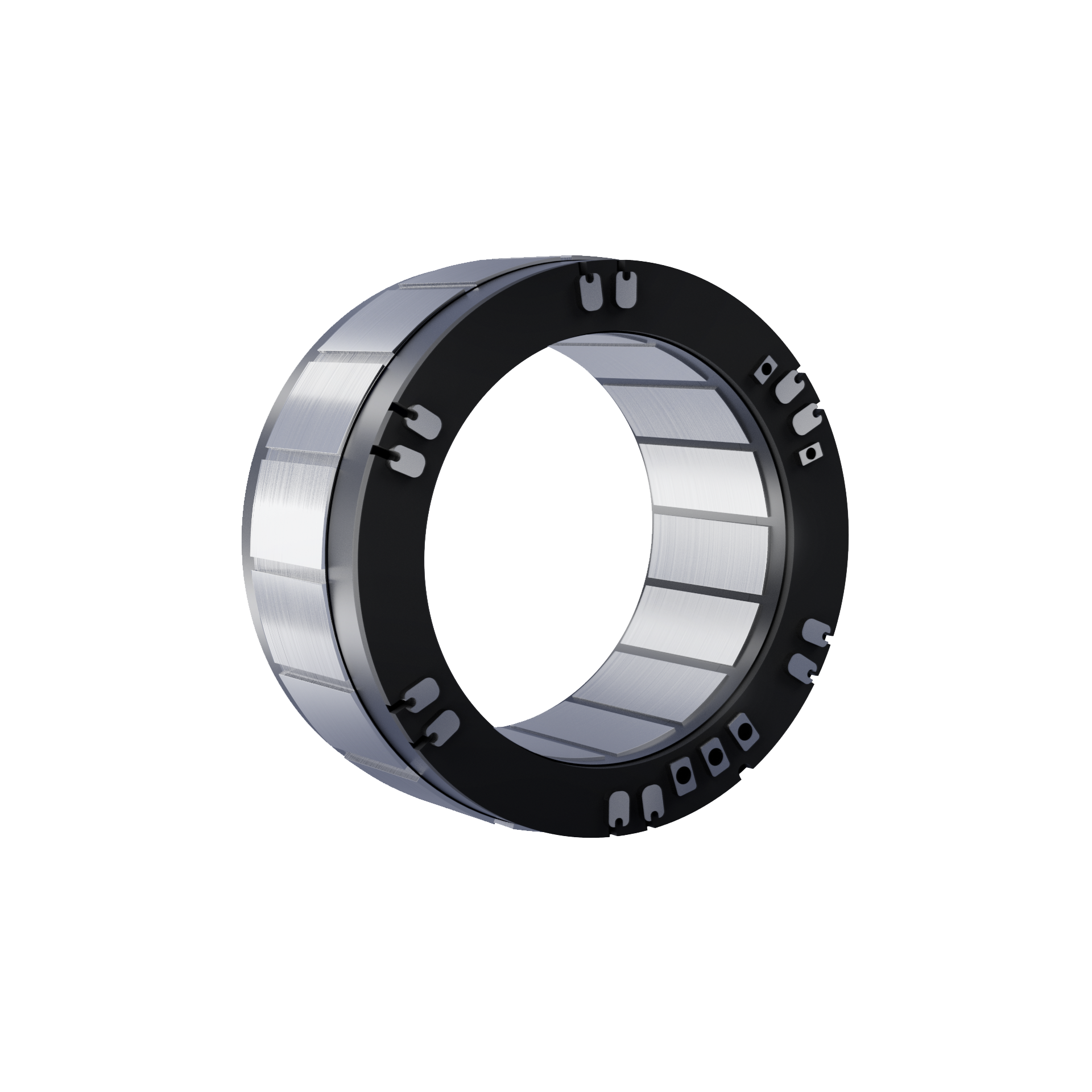
1. Can the motor be directly integrated into the customer’s existing mechanical structure? Are the mounting dimensions standardized?
Yes. Stator and rotor assemblies are available. Standard mounting dimension drawings and custom non-standard designs are supported. Machining accuracy of the mounting surface and concentricity must be ensured.
2. How is the motor fixed? Are there recommended stator/rotor fit tolerances? How is concentricity ensured?
The stator can be fixed by thermal shrink fitting (recommended interference ≥ 0.02 mm) or adhesive bonding (clearance ≥ 0.02 mm, with a glue groove recommended). The rotor is fixed with adhesive, with a clearance of approximately 0.02 mm; a glue groove is recommended on the shaft.
3. How is the motor driven? What controller should be used?
A servo drive is required. We offer an in-house integrated ring drive or an external Mini drive, and can also recommend compatible models.
4. Can an integrated version with an encoder be provided?
Yes. Incremental, absolute, and magnetic encoders are supported, enabling closed-loop control and high-precision positioning.
5. What type of drive is required? Are there recommended brands or models?
A drive that supports brushless servo control is recommended. Compatible drives are also available from us.
6. Is the motor compatible with the customer’s existing servo system or controller?
Yes, in most cases. Compatibility depends on interface types (encoder type, voltage and current levels), which need to be confirmed.
7. Is the motor start/stop smooth? Is there guidance for zero-position calibration?
Smoothness is determined by the drive control logic. We can provide tuning recommendations and a zero-position calibration manual.
8. Does the motor support closed-loop control? Can force/torque control or position control be achieved?
Yes. With an encoder and a closed-loop drive, high-precision position, speed, and torque control are achievable. Some solutions support impedance/force control modes.
9. Can frameless motors be used in high-temperature, humid, or dusty environments?
The motor has an open structure. Additional protection (e.g., dust covers or sealed cavities) is recommended when integrating into the end application. We can provide protection recommendations.
10. What is the service life of the product? Are there any application examples?
Normal service life exceeds 20,000 hours, suitable for 7×24 continuous operation. Widely used in medical devices, robotics, and other fields.
11. Are there relevant life test data or successful application cases?
Yes, there are successful cases across multiple industries, with validation through temperature rise, shock, aging, and other tests.
12. Can non-standard customization be done based on the customer’s structural or parameter requirements?
Yes. Non-standard customization is supported for rotor outer diameter, stator thickness, voltage/current, etc. Minimum order quantities are flexible, and prototype delivery typically takes 4–6 weeks.

Stock Code: 002979
Address: 15-20/F Block B, Nanshan l Valley, No.3157,Nanshan District, Shenzhen City Guangdong Province China
Tel: +86 0755 86088550
Fax: +86 0755 26402718
Website: https://www.leadshine.com
Email: store@leadshine.com


